
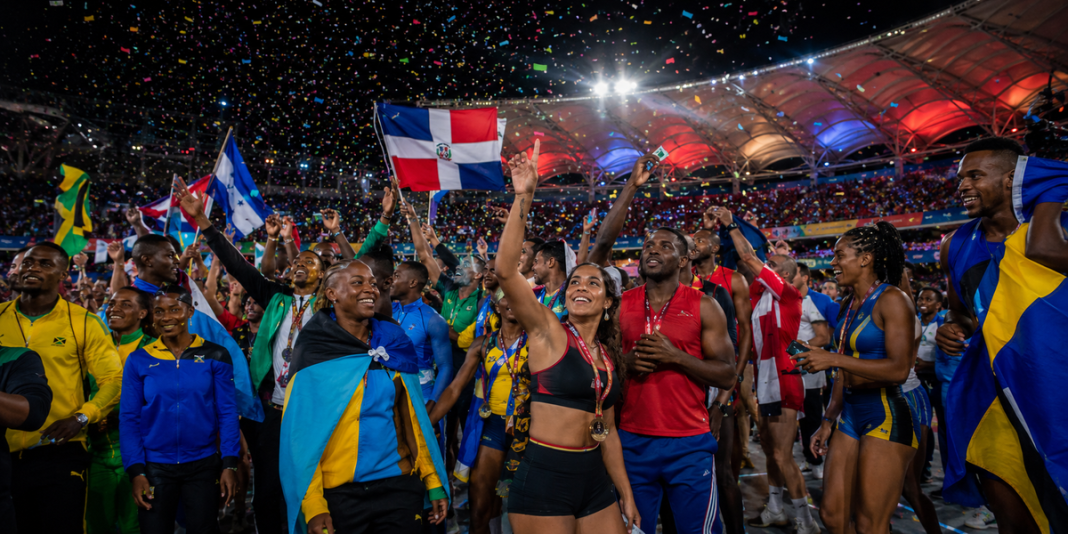
The 2026 Central American and Caribbean Games have concluded in Santo Domingo after bringing thousands of athletes together for one of the region’s largest sporting celebrations.
Held from July 24 to August 8, the 25th edition carried special historical weight. The Games marked a century since the regional competition began in 1926, reinforcing its position as the oldest continuing multi-sport event of its kind in the Caribbean and Central America.
More Than Medals
Athletes competed across 40 sports and dozens of disciplines, from athletics, swimming and boxing to team sports, racquet events and newer competitive formats. Mexico led the medal standings, followed by strong performances from Colombia, Cuba, Venezuela, Puerto Rico and the host Dominican Republic.
For Caribbean delegations, the Games provided something equally important: high-level competition within the region. Athletes gained experience in major venues, national federations tested their development programmes and emerging competitors had an opportunity to perform under international pressure.
The event also allowed smaller nations and territories to measure progress against neighbors facing similar limitations in funding, facilities and population size.
A Regional Sporting Platform
The Central American and Caribbean Games are an essential bridge between national championships and the world’s largest competitions. They expose athletes to multi-sport village life, formal accreditation systems, demanding schedules, anti-doping rules, media attention and the responsibility of representing a country.
Those experiences can prepare competitors for the Pan American Games, Commonwealth Games, world championships and Olympic Games. They also help coaches and administrators identify gaps in preparation long before athletes reach the global stage.
For the Dominican Republic, hosting the Games required major coordination across venues, transportation, security, accommodation, volunteers and event management. The investment leaves sporting infrastructure and organizational knowledge that can support future tournaments.
Youth Inspiration and National Pride
Regional events have an impact beyond elite sport. Young people watching athletes from their own communities can see a more direct path from local clubs to international competition.
That visibility matters in countries where sporting success depends heavily on family sacrifice, volunteer coaches and limited federation budgets. Medal performances can attract sponsorship and public attention, but development also requires consistent support for athletes who are still years away from the podium.
The Games are therefore an opportunity for governments and sporting bodies to assess what happens next. Athletes returning home need recovery, evaluation and a clear plan for the next stage of training. Federations should use the results to strengthen coaching, sports science, competition calendars and talent identification.
The Next Century
The centennial edition celebrated a proud past, but its lasting value will depend on how the region prepares for the future. Climate-resilient facilities, athlete welfare, gender equity, transparent governance and sustainable financing are becoming central to successful sport systems.
Caribbean nations also have opportunities to connect sport more closely with education, tourism and health. Regional tournaments can bring visitors, create media content and inspire wider participation in physical activity.
As the flame goes out in Santo Domingo, the medals will remain an important record of achievement. The deeper legacy, however, lies in the athletes who gained confidence, the young people who discovered new heroes and the regional institutions that now have another century of sporting ambition to build upon.